Reclaiming the Future: Third Places
In the last year's competition, The Sustainable Chair Project, students transformed discarded materials into functionally artistic chairs. The final showcase revealed the deep truth: a chair is never merely an object. It is a catalyst for a gathering. In this edition of Reclaiming the Future, we shift the lens from the commodity to the surrounding ecosystem, moving from furniture design to spatial transformation.
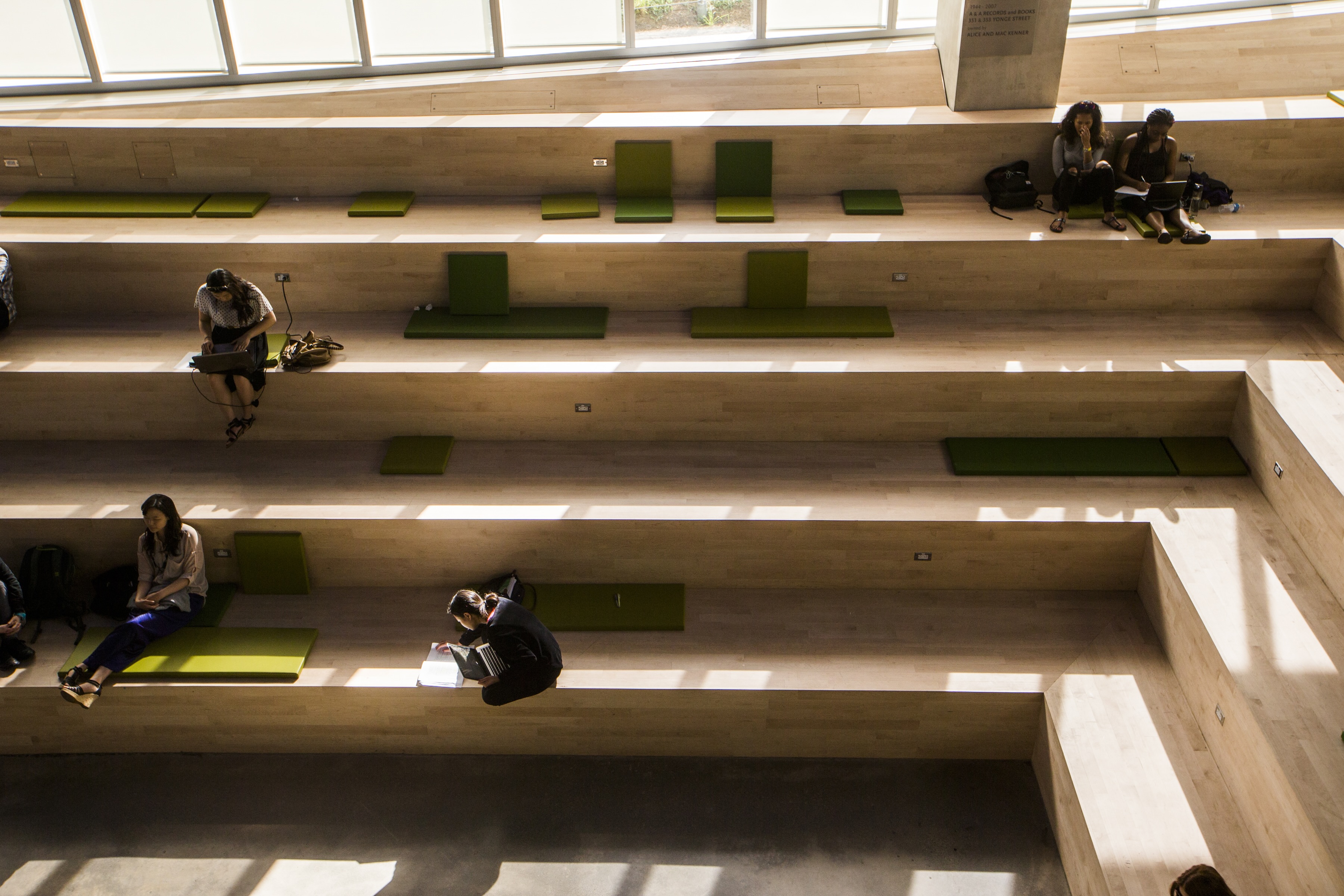
Embedded in downtown Toronto, TMU is a fast-paced, hyper-dense commuter campus where students navigate high levels of isolation, burnout, and a fragmented sense of belonging. Especially during winter on our urban campus, outdoor public options dissipate, leaving indoor environments transactional, overcrowded, or monetized.
— Ray Oldenburg, The Great Good Place (1989)
The Challenge
The Third Places challenge addresses the urgent need for non-commercial indoor sanctuaries that awaken curiosity, nurture creativity, and invite meaningful self-discovery.
How can we reclaim, revive and reactivate underutilized indoor campus areas into a sustainable, accessible third places that pair physical environmental design with human-led programming to spark creativity, invite inspiration, and foster genuine belonging?
Scope & Outcomes
Rather than overhauling massive architecture, this open-format challenge asks students to craft intimate, high-impact "corners of activation." Submissions must pair a mobile physical framework with an indispensable human activation.
the 8x8
footprint
Each team should design their projects within a 8x8 ft space.
The Third Place should comfortably host 3–5 people, yet be constrained enough to demand smart, efficient design. At the final showcase, participating teams will be given space on TMU campus to bring their visions to life.
INSTALLATION criteria
Installations must be easily transportable, accessible, mobile, usable, and dynamic.
Teams will use campus resources and reclaimed materials to curate ambiance, lighting, furniture, or any spatial boundaries, symbolic or material: whether that means a completely enclosed micro-room or an open, modular pop-up.
human
activation
Physical structure serves as the stage, while human engagement is the play.
Teams must design a live interaction to bring their Third Place to life. It can be a facilitated dialogue ritual, a wellness session, a self-guided philosophical exploration, a creative storytelling queue, or a collaborative art prompt.
The outcome is a collection of dynamic, transportable micro-sanctuaries that prove how small, intentional spaces can awaken curiosity and turn routine urban transit into moments of wonder.
Important Dates
November 4 @ 4PM — Workshop 1: Introduction to the Challenge + Third Places
November 11 @ 4PM — Workshop 2: Sustainable Design Principles
November 30 @ 11:59PM — Proposal Submission Deadline
March 11 @ 5PM — Final Exhibit (for select participants)
